Costs: You become a ‘QfWf-friend’ through a donation and get a welcoming gift of the book Amor Fati! If possible € 45,= a year on IBAN NL14TRIO0777827654 of the Quest for Wisdom foundation in Weesp.
The QfWf is happy with every donation given from a good heart!
Wisdom from all over the world is an expression of cultural diversity as well as of unifying principles, such as the Golden Ratio: the principle that is defining natural growth as well as the harmony by which we perceive beauty. Cultures have diverse symbols of natural wisdom and beauty, as well as moral knowledge that is passed on through proverbs — for example, by means of the Golden Rule: “What you would not want done to you, do not do so to another”.
The ancient wisdom in symbols, rituals and natural principles can be extracted from (animal) stories, containing a moral clue or example: such as how to become as clever as the fox, or wise as the crow, witty as the spider or courageous as a lion. Collective knowledge and experiences are conveyed through seasonal rituals for harvest and the transition of solstices with light festivals in which the passage through the four seasons is celebrated in culturally diverse forms.
The Quest for Wisdom seeks to gather ancient symbolic and ritual wisdom from cultural traditions as an intercultural language in order to cocreatively develop:
contemporary artistic forms as expressions of both diversity and transcultural values
transcultural values and narrative wisdom for developing practices for global citizenship
By focussing on uniting principles like the Golden Ratio and the Golden Rule in culturally diverse materials, the facilitation of personal growth and community building is highlighted in the collected ancient wisdom on a collaborative Quest for Wisdom in order to:
to give a platform for the wisdom from different cultures and traditions
to enhance intercultural communication and interaction
to develop unifying transcultural practices by means of the artistic and narrative expressions
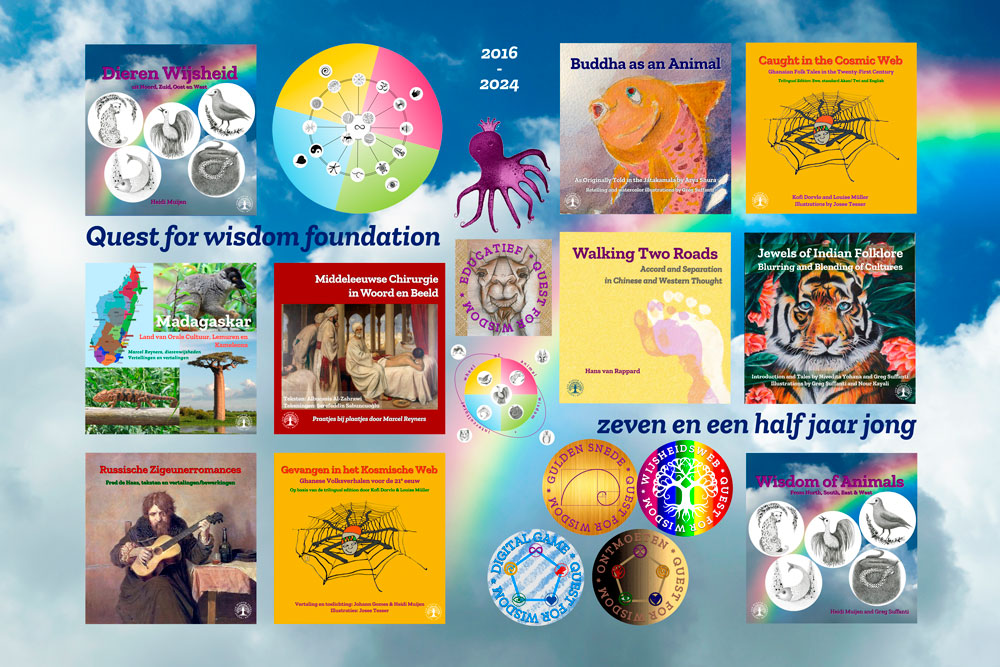
The Golden Ratio consists of a culturally diverse palette of materials that are grouped around particular themes; through play, proverbs, myths and animal stories. The QfWf has developed two series of (e)books: the Animal Wisdom Collection and the Wisdom Collection as well as contributions on a yearly programme on The Golden Ratio, thereby developing practices of World Citizenship.
One hundred percent of the money raised by the sale of all of the products will be used in realising our upcoming QfWf educational projects, all of which are non-profit and run by volunteers.
The Animal Wisdom Collection aims to unlock cosmopolitan and ecological wisdom from cultural traditions worldwide. It consists of an intercultural storytelling programme, developed from the artistic and philsophical presentations on this theme at the Meeting Days 2019-2021. The Quest for Wisdom-Brochure shows the up to date collection to be purchased in the Shop.
With help of the Fund Zuidoost i.c.w. Prince Bernard Culture Fundand the QfWf-project resulted in a digital intercultural lesson on fables worldwide and a collection of animal stories worldwide, presented for free on the website with explanation of the intercultural connections in Animal Wisdom. The aim of the Animal Wisdom Programme is to show the beauty of cultural diversity of animal stories from all corners of the world on the one hand and, on the other hand, the cultures uniting cosmopolitan and ecological values expressed in the fables. Developing the ‘elemental’ wisdom that transcends the boundaries of cultures is the focus of this series of (e)books.
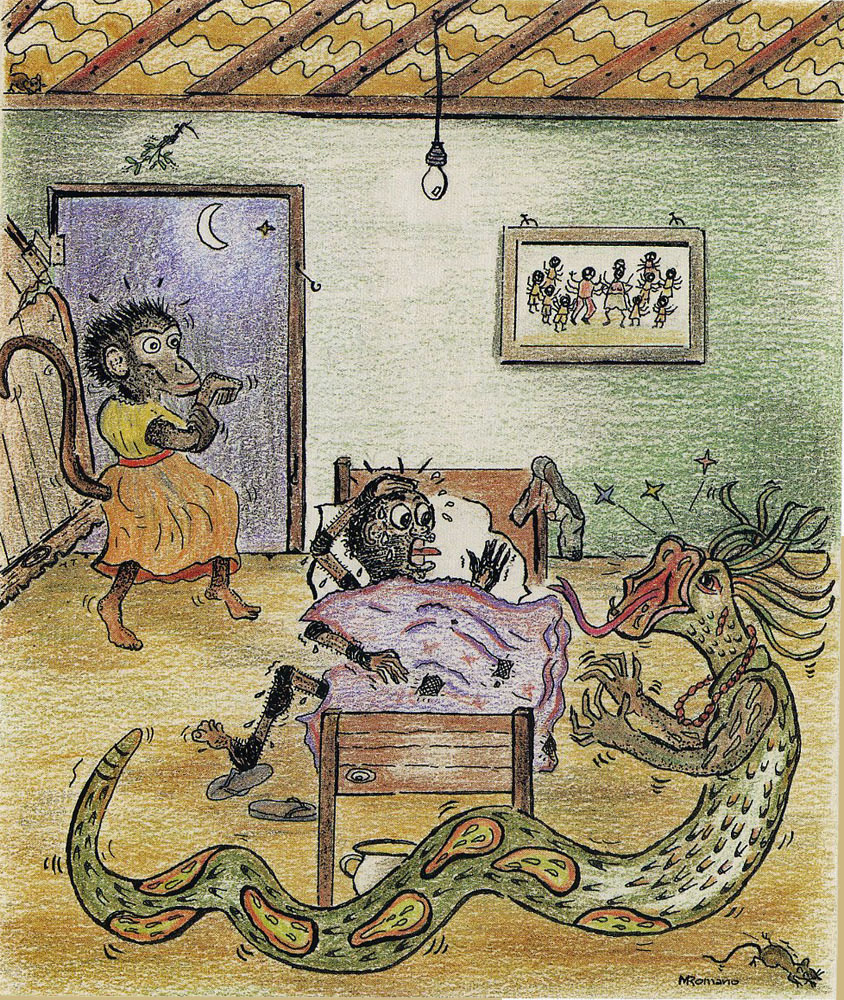
Caribean stories on Nanzi the Spider – Mirelva Romano
The natural power that animals embody — attributed to animals in fairy tales, legends, myths, and other stories — show this elemental wisdom known to cultures worldwide. It is a symbolic form of wisdom, holding up a mirror to humans on how to shape the good life in the cosmopolis. These cultures transcending values in stories offer a perspective beyond value relativism and power politics by mono-cultural, polarizing and oppressive ideologies on the world stage.
QfWf-Authors and artists have collected animal wisdom stories worldwide. They have processed these stories in new and appealing and artistic forms. In doing so, they introduce readers both to cross-cultural wisdom in a variety of genres as well as to stories (traditions) from specific cultural regions.
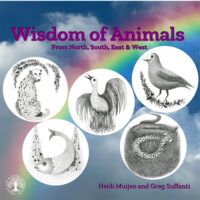
Heidi Muijen and Greg Suffanti
EN, 2022
ISBN: 978 94 921 27 105 177 pages, pdf Purchase: Wisdom of Animals
This e-book explains the QFWF storytelling program.
It unlocks the philosophy behind the Intercultural Wheel of Animal Wisdom.
This e-book contains 20 animal stories from four cultures: Snake, Salmon, Raven, Lion and other (mythical) animals are always highlighted from the North, South, East and West.
Sninniq Wild Woman – story of the indigenous Northern American people – Greg Suffanti
In all the stories, original works by visual artists — Caroline Young, Chrisje Ronde, Greg Suffanti, Louis Van Marissing, Nour Kayali, Robin Stemerding and Veronica HuisintVeld — express the wisdom that these animals embody. Just like the photos by Adri de Groot, Gea Smit, Heidi Muijen, Johann Gomes, Joke Koppius, Laurens Gomes, Maike Stegeman, Marie-Claire Marx, Miny Verberne and Moniek Steggerda.
Due to the appealing stories and artistic forms, this animal wisdom drawn from all over the world, feeds the soul very directly – even without having to decipher the symbolism – and in addition, reflections by Dr. Heidi Muijen on all stories provides food for reflection on how animals as strange birds, smart foxes and courageous lions can develop ‘global citizenship’.
This book is available in a Dutch version and in an English version
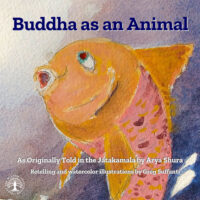
Buddha as an Animal
Greg Suffanti
EN, 2022
ISBN: 978 94 921 27 075 61 pages, pdf Purchase: Buddha as an Animal
The third eBook is Buddha as an Animal, as Originally Told in the Jatakamala by Arya Shura, and features classic Buddhist stories retold by Greg Suffanti. Several stories are in poetic form and one can be heard as a rapversie!
It is sung how the Bodhisattva, reborn as Dhritarashtra, king of the geese, spread the wondrous Dharma….
Read how a woodpecker, rabbit, buffalo, elephant and other wise animals from the east also embody Buddhist virtues!
In addition, Greg has illustrated the stories with his watercolours.
This e-book contains all of the stories from the Mahayana Buddhist Jatakamala Narratives in which Buddha is represented as an animal.
InEnglish
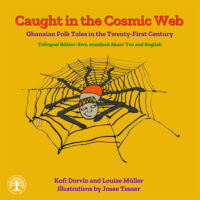
Caught in the Cosmic Web — Ghanaian Folk Tales in the Twenty-First Century
Kofi Dorvlo and Louise Müller
EN, Akan/Twi, and Ewe, 2022
ISBN: 978 94 921 27 112 130 pages, pdf Purchase: Caught in the Cosmic Web
and
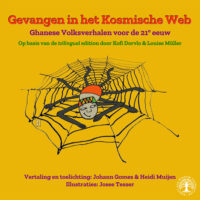
Gevangen in het Kosmische Web — Ghanese Volksverhalen in de 21e Eeuw
Heid Muijen and Johann Gomes
NL, Ewe en standard Akan/ Twi, 2023
ISBN: 978 94 921 27 028 circa 140 pages, pdf Purchase: Gevangen in het Kosmische Web
Ghanaian stories about the spider Anansi and other African animals. Twenty Animal stories straight from the modern oral tradition, put in writing for the first time by Dr. Kofi Dorvlo… can be found in the 4th and 5th e-book! With an introduction by Dr. Louise Müller. Josee Tesser’s cheerful illustrations bring the old Ghanaian stories to life for today’s readers with her refreshing and artistic interpretations.
As experts in African Studies, Louise Müller and Kofi Dorvlo shed light on how the spider Anansi, when encountering other animals, demonstrates both his wit and criticism of the greed, stupidity and arrogance found in human society.
Two trilingual e-books:
English, standard Akan/Twi and Ewe — and
Dutch, standard Akan/Twi and Ewe.
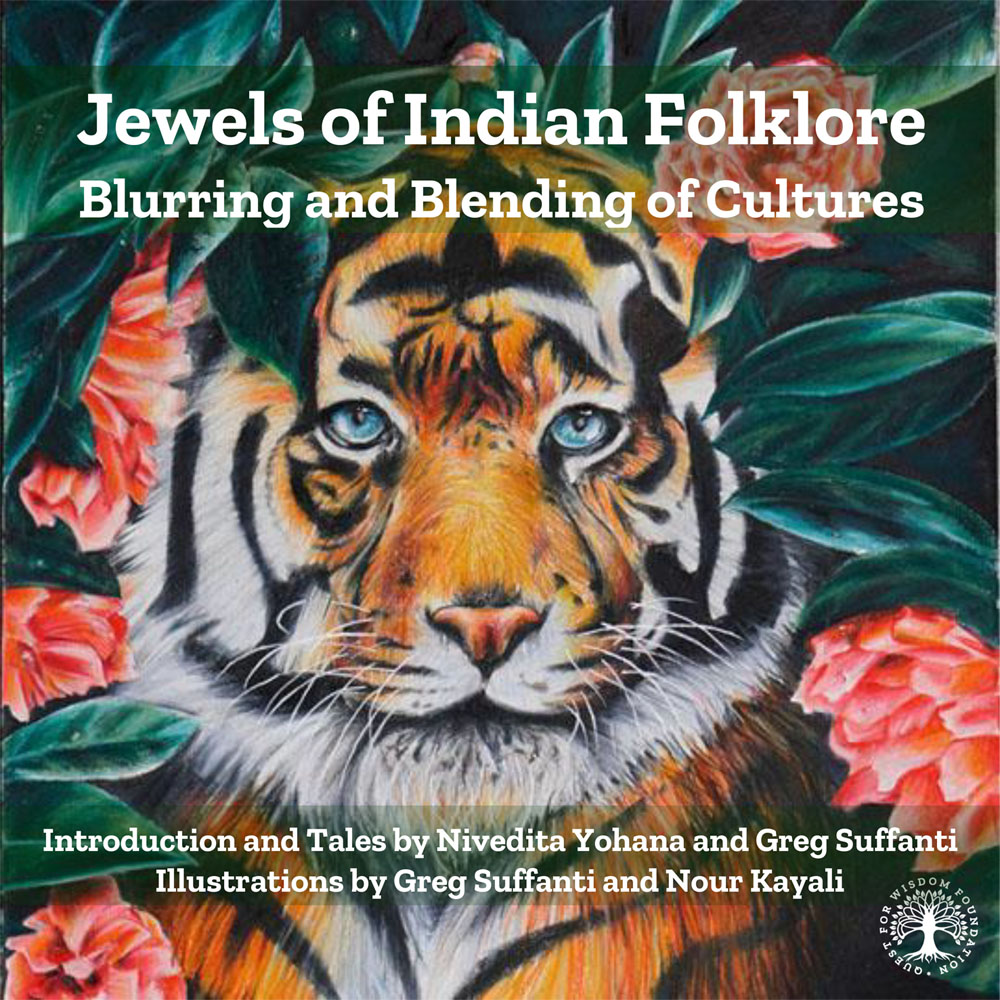
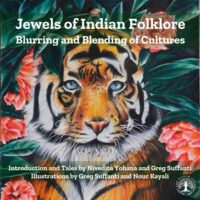
Jewels of Indian Folklore ― Blurring and Blending of Cultures
Nivedita Yohanna and Greg Suffanti
EN, 2022
ISBN: 978 94 921 27 136 173 pages, pdf Purchase: Jewels of Indian Folklore
The sixth eBook contains 20 traditional Indian stories: some are retellings by Dr. Nivedita Yohana and Greg Suffanti of stories from, among others, the classic Panchatantra — from the ancient Hindu Vedic tradition.
In addition, Nivedita and Greg, inspired by this old storytelling tradition, have created a number of original stories themselves. Enjoy the timeless wisdom, which is reflected in the coexistence of animals, with difficult confrontations between a jackal and tiger, the servitude of the camel, the arrogance of the young tiger and the witticisms of a monkey. Each ‘moral of the story’ has been brought to the fore with practical and fun exercises for students and reflections on the virtues that the animals represent.
Together, the authors illuminate the meaning of these stories and their roots in the Vedic tradition.
Nour Kayali’s original drawings and oil paintings and Greg’s watercolors depict the mythical wisdom of these animal tales.
In English.
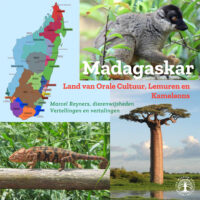
Madagaskar, Land van Orale Cultuur, Lemuren en Kameleons
It was English and Norwegian missionaries who were the first to record their folktales, before Madagascar became a French colony in 1895. In few similar countries was there such a wealth of oral tradition in all its forms.
Dr. Marcel Reyners takes us along in the 7th e-book to a series of Malagasy animal stories. Such as the story of the healing of the king’s only daughter, which provides a fascinating explanation of why the locust serves as food for the chameleon.
Illustrated with animal and embroidery pictures by Malagasy women, and with original illustrations by Mirelva Romano and watercolours by Greg Suffanti.
In Dutch.
Purchase of Educative Materials
One hundred percent of the money raised by the sale of all of the products will be used in realising our upcoming QfWf educational projects, all of which are non-profit and run by volunteers.
Each year, the Quest for Wisdom foundation develops an artistic intercultural programme highlighting the art of living as World Citizens. We present the Quest for Wisdom’s yearly search for themes on the Golden Ratio through various artistic and digital media — like the intercultural programme around the statue of the Rainbow Paradise Bird with the Cosmic Egg — as well as by Seasonal Meetings and the Annual Meeting Day.
Fresh from my liver bubbles the feeling that these initiatives are essential for a society, bottom-up encounters, where humanity appears in difference.
Warmheartedly,
Personal communication, 4th of April 2019
Global Citizenship of the Street: 2023-2024
A follow up in 2026-2027
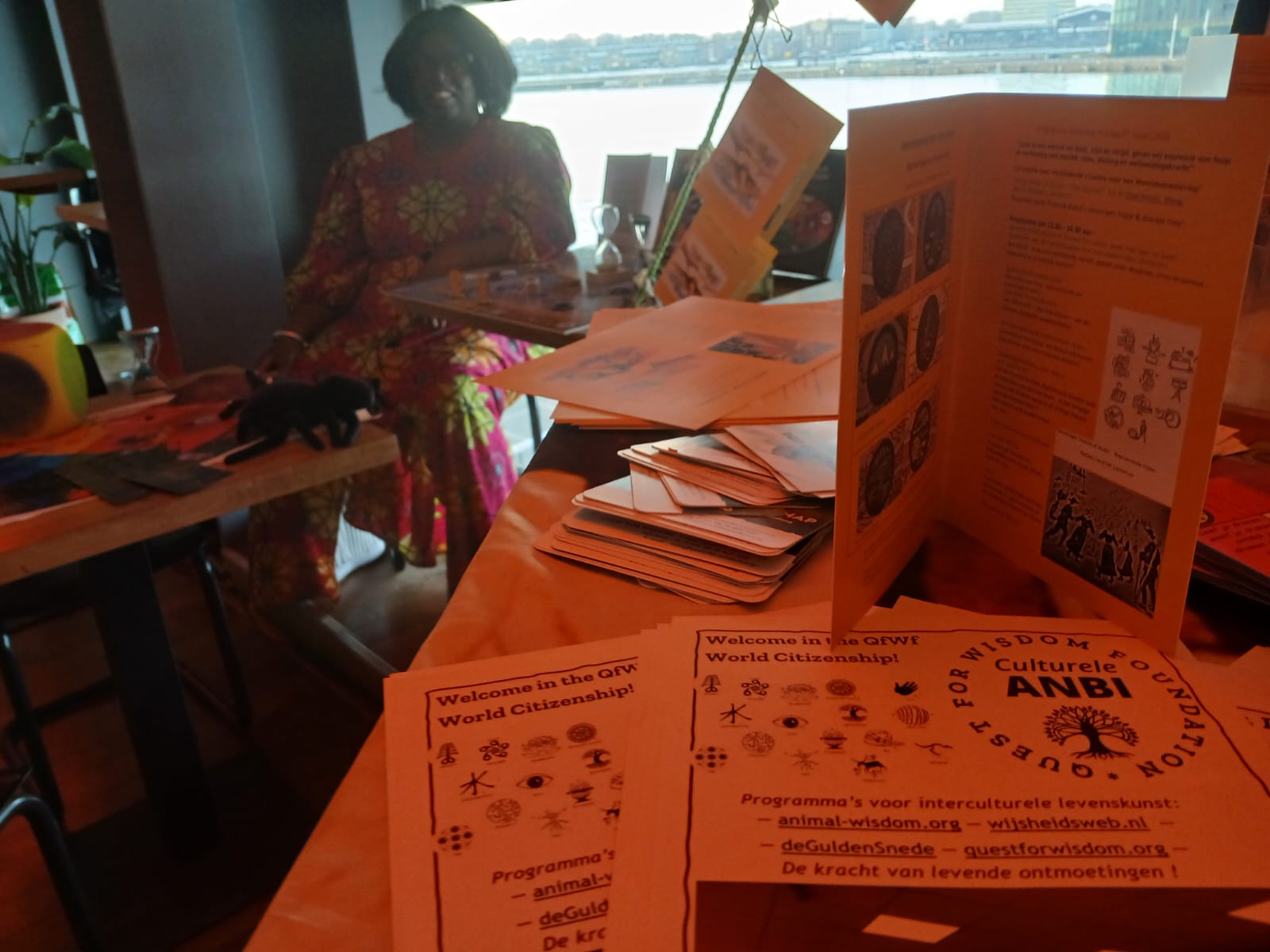
Pakhuis de Zwijger Side Event Programme against Racisme-With Playful Dialogue Tables-19 maart 2026Pakhuis de Zwijger Side Event Programme against Racism -QfWf-Table with flyers Playful Dialogue
The Quest for Wisdom foundation is participating as one of the eight Alliance partners to fight against discrimination (as an administrative priority of the Municipality of Amsterdam for the period 2026-2027) and to promote an inclusive society, in order to develop global citizenship. To this end, the Association Aaneen is applying for a subsidy as the lead applicant. In collaboration, we will organize activities in Amsterdam that bring people together to promote empathy for one another. Together we are stronger, and thus we have developed a Project plan to develop and spread our Global Citizenship program.
Although the subsidy from the municipality of Amsterdam has not been granted, the Alliance Aaneen has been invited to organise a Side Event on Thursday 19 March 2026 at Pakhuis de Zwijger as part of the commemoration of 21 March 2026, the 60th International Day for the Elimination of Racial Discrimination, established by the UN after the Sharpeville massacre of 21 March 1960, during the Week against Racism. The Quest for Wisdom hosted two tables with intercultural game and dialogue forms and playful elements from its QfWf-Global Citizenshop Programme.
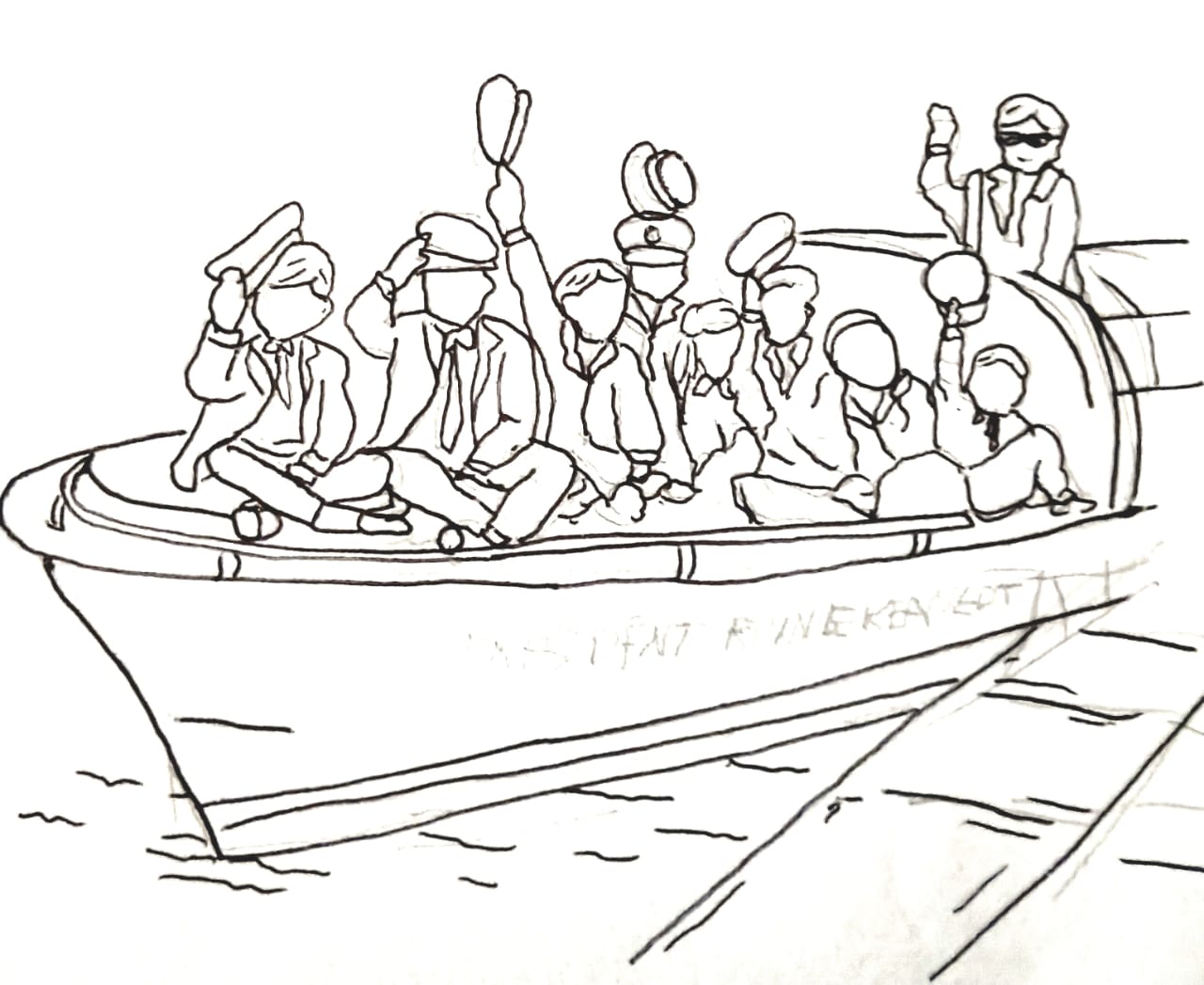
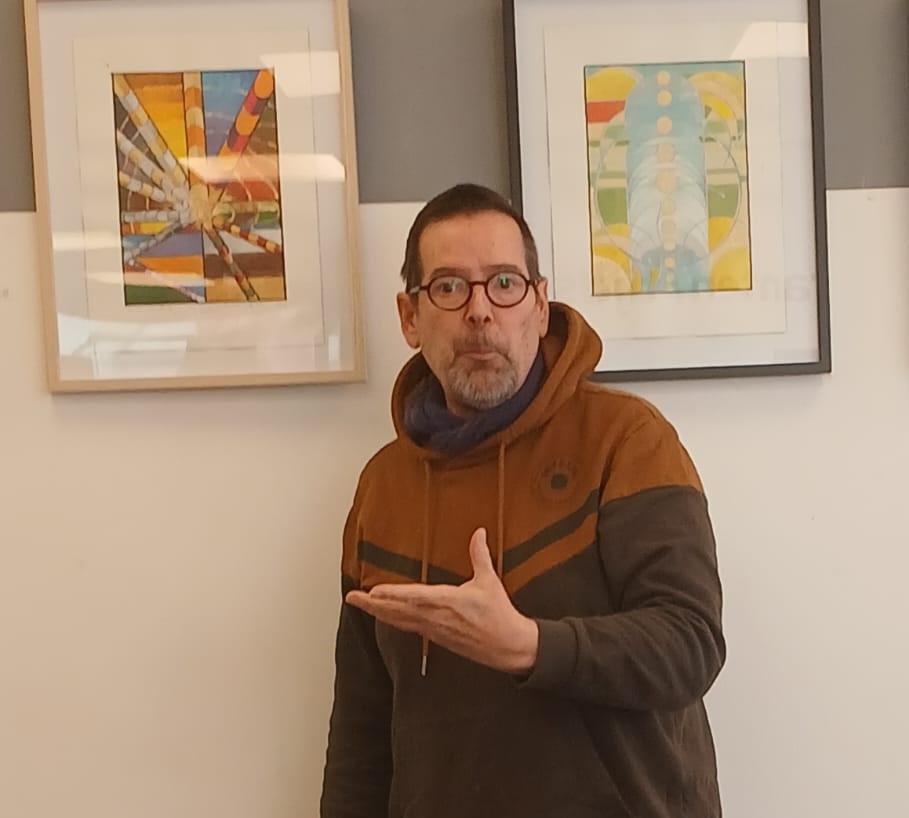
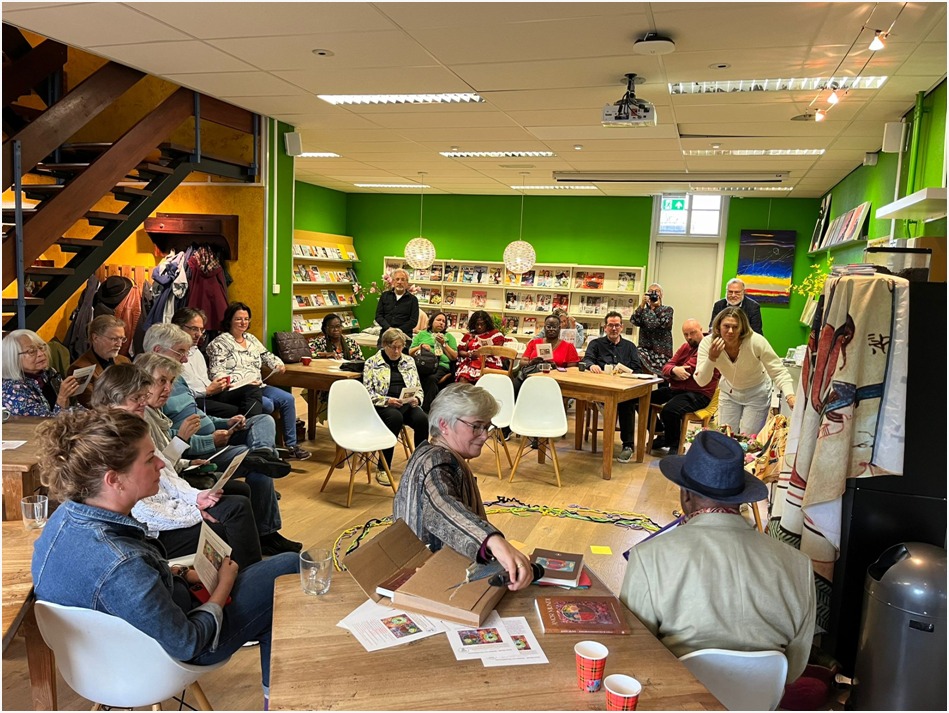
Greg Suffanti telling about his Migrant series during the opening of the Amor Mundi exhibition in the Library OBA.
In our Report on an experiment “Global Citizenship of the Street” the development of our QfWf-project has been described as an triptych in three phases. The first phase consisted of remembering the colonial past of slavery by means of research and essays by Fred de Haas. This author adds historical and intercultural background to the deplorable facts, as well as the beauty of Caribean poetry and music, reflecting the transforming intercultural identities. Josee Tesser made drawings on the different themes, with a touch of sharpness and humour. The result is published in 2025 as the book (Post) Koloniale wa(a)r(d)en.
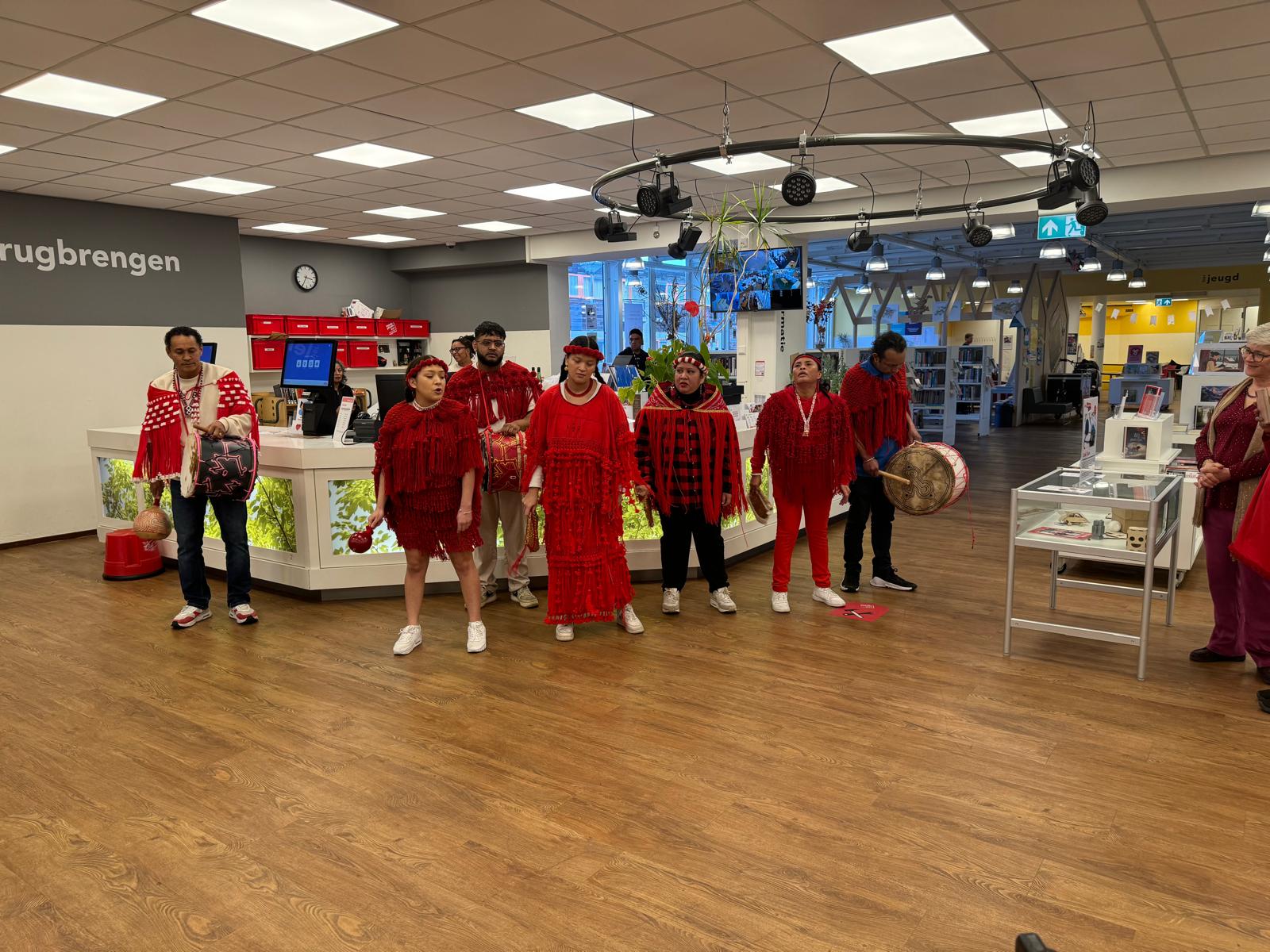
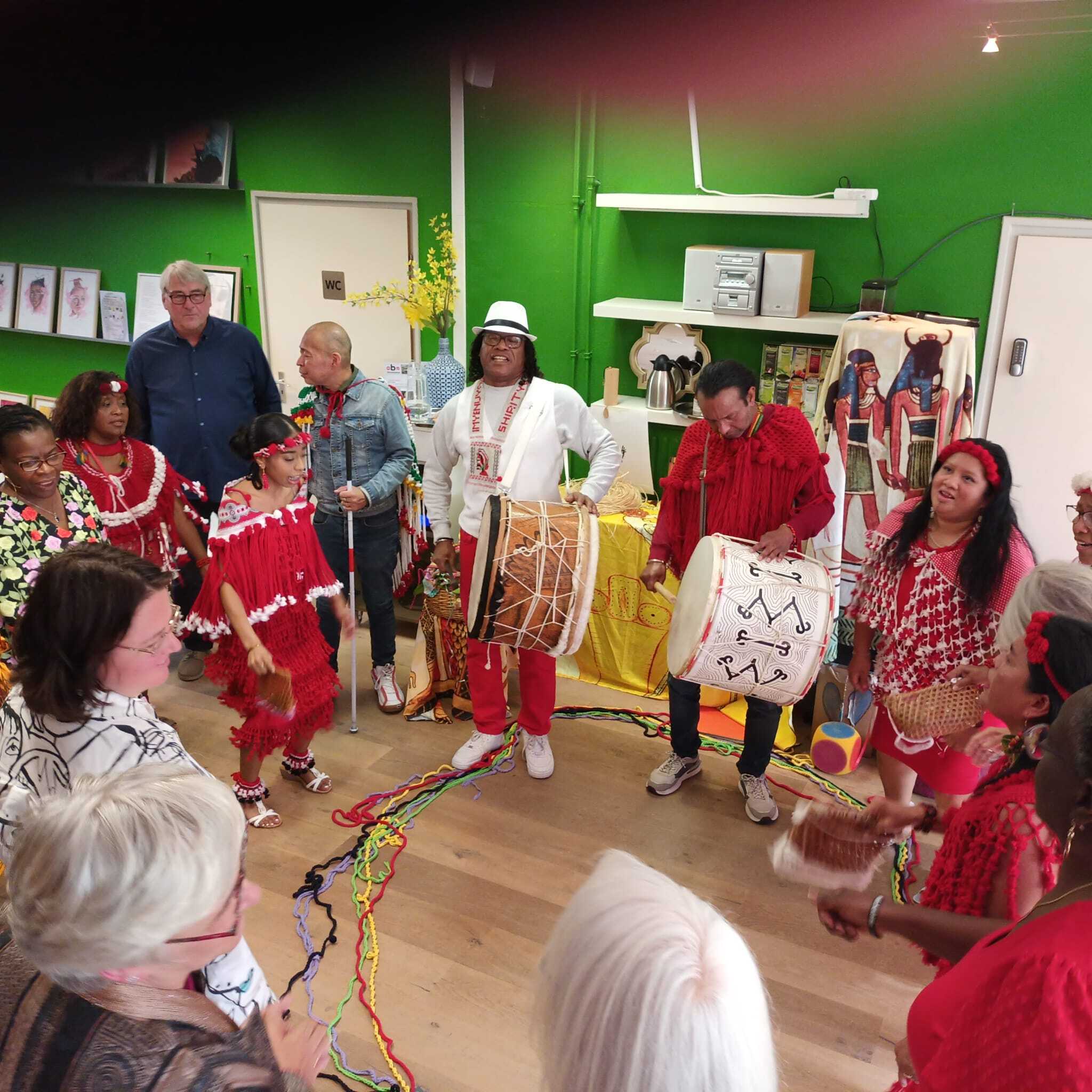
Indigenous Surinamese group Wehpokamanong Presentation Amor Mundi 28 sept.2024 OBA
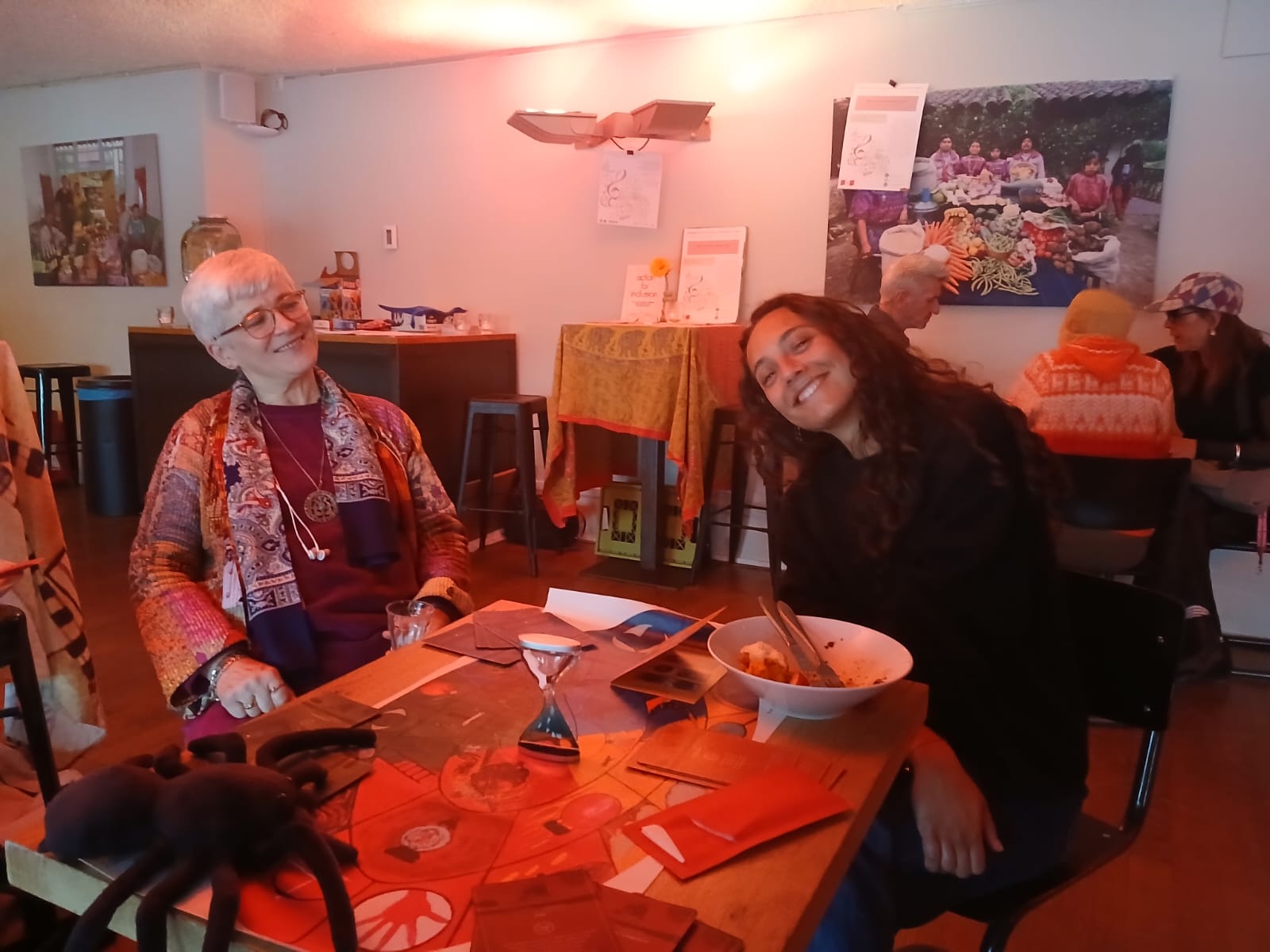
The QfWf-Soul circle expresses through painting, singing, dancing her dream of World Citizenship, as documented in the book Amor Mundi (phase 2). The Arts Dialogues around the board-game and book Amor Fati, has been shared with social groups and partnering organizations in diverse events during the season of 2024-2025: for Ukrainian refugees, living at the Regenbooggroep and for global citizens of the street in the Openbare Bibliotheek Amsterdam, located in Weesp and Reigersbos (fase 3).
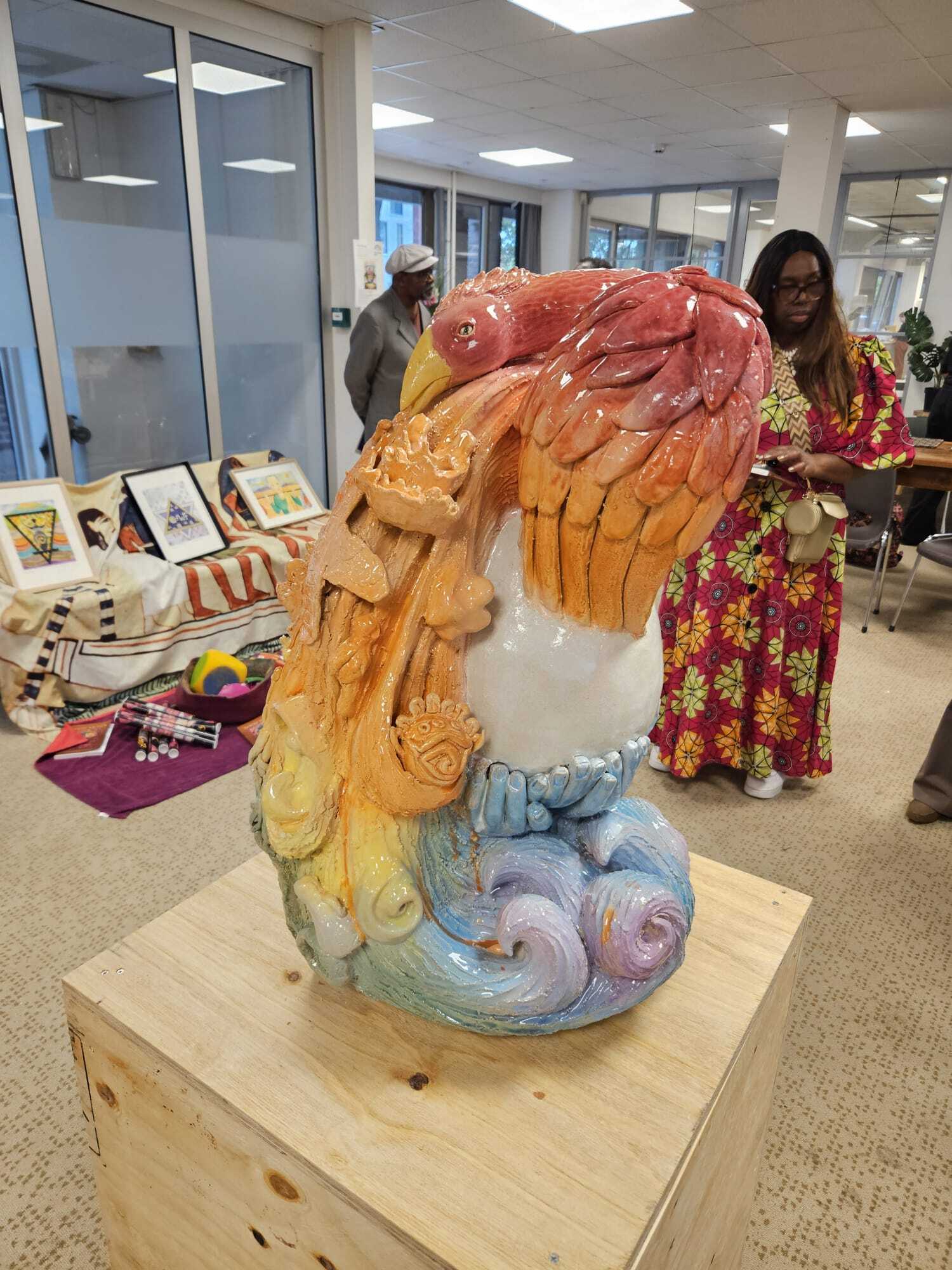
QfWf-Regenboog Paradijsvogel-Kosmisch Ei – Camile Smeets
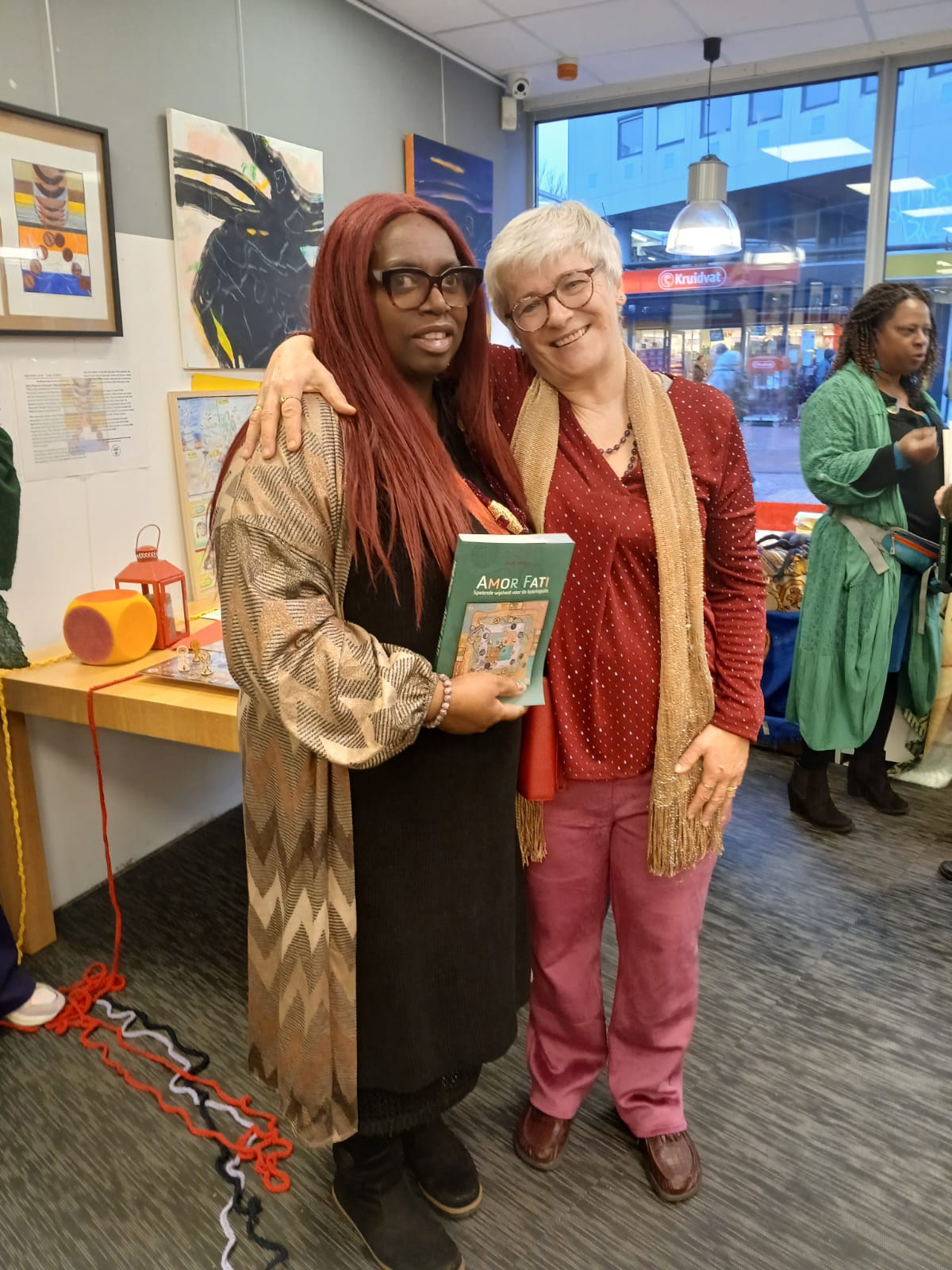
In this way the QfWf-project group presented Art as a means to wonder and organized a travelling exhibition around Amor Mundi and the presentation of the book and game Amor Fati ― playful wisdom for the cosmopolis. In 2025 more stories, practices and dreams of global citizens will be gathered and published on The Golden Ratio. The intercultural artistic programme was a cocreation with collaborative partners Culturele Droomwevers and Curinesa, autonomous artists, like Camile Smeets — who made together with the QfWf-projectgroup a ceramic statue of the Rainbow Paradise Bird with Cosmic Egg — as well as with the indigenous Surinames Cultural Group in Weesp Wehpokamanong, who is dedicated to transfer the cultural heritage to younger generations. The Qfwf-Exhibition on Global Citizenship will be travelling to other locations with the Qfwf-Intercultural programme.
Animal wisdom-programme ― narratives for both young and old
The Fonds voor Zuidoost has — in collaboration with the Prins Bernard Cultuurfonds — provided the QfWf in 2020 a small grant to support her programme on intercultural storytelling Animal Wisdom, espcially during the Corona lockdown:
“Fund Amsterdam Southeast is unanimously enthusiastic about your project. Although they think the project is ambitious, they find it a worthy initiative. They like how you use this project to introduce children to the multicolored multicultural society.
In the eyes of the neighbourhood committee, you are making an important intercultural contribution that can be used in many schools.
There is confidence in the organization and in the lessons that have already been developed.
They welcome your digitization and wish you good luck.”
Tekening Nour Kayali 2021 voor Animal Wisdom
The intercultural lesson on Animal Wisdom was developed by gathering animal stories from the four corners of the world. Its goal is to transform examples of the old storytelling traditions into educative artistic forms for actual contexts and the young generation, in order to let them discover both the beauty of cultural diversity, as well as transcultural paterns between the divers storytelling and wisdom traditions. During the Corona lockdown the artistically developed materials were gathered on a specially designed website Animal Wisdom. On it you will find Animal Stories from different cultures, such as the Great Goose Rap from the Buddhist Jatakatamala tradition, as well as information on their (inter) cultural and historical context.
An Intercultural lesson
The wisdom of the octopus is a symbol for Animal Wisdom — Chrisje Ronde
The intercultural lesson for students serves as an example and intercultural perspective, to be developed further into educative modules for (world-) citizenship; both for primary and secondary schools. The educative materials are presented through different media and arts, to stimulate the imagination and to show culturally diverse narratives and symbols of animal wisdom, such as the intelligence of the octopus as well as of the fox Reynaerde and of the spider Anansi. The intercultural Animal Wisdom programme shows colourful unity of archetypical symbols within the diversity of cultural traditions.
The project was developed in 2021-2022 and presented in the Library of Amsterdam South-East with two workshops and follow up programme:
Workshop 1: When Animals Narrate Cultures …
Workshop 2: Animals as Wisdom Seekers
Due to the application for funding from the KNAW Pilotfonds Wetenschapscommunicatie door Wetenschappers the QfWF is building a network with researchers from the University Leiden and the African Research Institute of Óbudai University in Budapest, Hongary.
The Universiteit Leiden has published on the QfWf-projects in her online news. On the Annual Meeting Days of 2020 and 2021 more Animal Wisdom content is developed with storytelling, dance, play, music and art.
Please, take a look at the QfWf-video-channel withanimations and videos.
Animal Wisdom — e-books
Worldwide animal stories convey both wisdom about animal coexistence, promoting ecological awareness, as well as serving as a mirror for human society. As such they call attention to issues of diversity and inclusion in education. To this end, there has been a spinn of to the intercultural animal wisdom teaching module, resulting in the QfWf-series of (e)books. The Animal Wisdom series is generic in scope so that it can be applied in many educational contexts – such as secondary education and (higher) education. An Animal Wisdom game is under construction.
One hundred percent of the money raised by the sale of all of the products will be used in realising our upcoming QfWf educational projects, all of which are non-profit and run by volunteers.
Game for wisdom ― the Wheel of the intercultural art of living
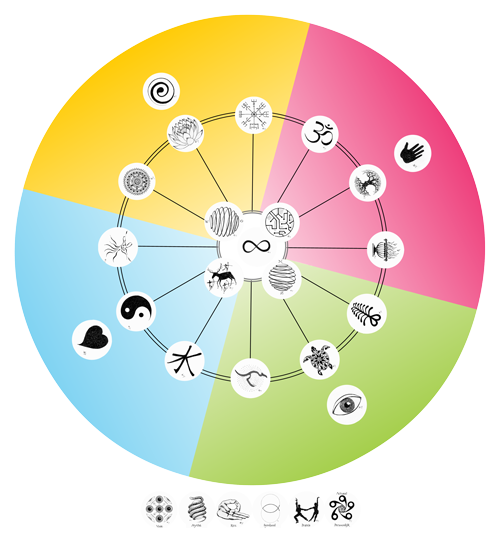
The first project of the Quest for Wisdom consisted of the development of the Game for Wisdom in the year of her foundation in 2016. The core of this game was the Wheel of the intercultural art of living in order to categorize the mythical stories, symbols and proverbs from all corners of the world without ranking them in a way suggesting cultural superiority.
To play the game, you are invited to explore your vision on happiness by means of seven questions, confronting you with met different visions from cultures from all corners of the world. As a result the Wheel of the intercultural art of living is leading you to one of the 20 stories and 80 symbols that are integrated in this game.
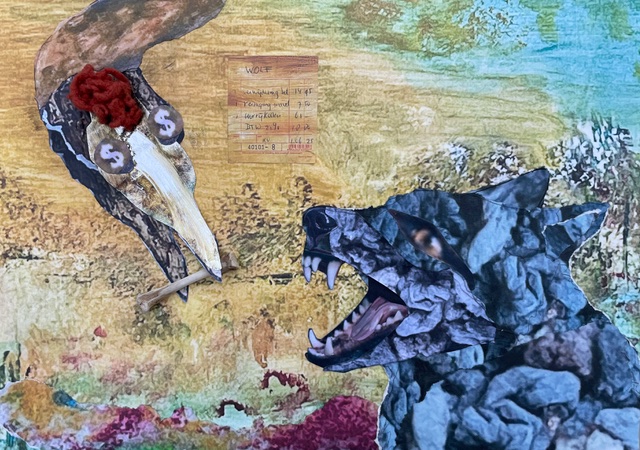
Images of good and evil, The Wulf and the Crane – Annelie van Steenbergen
With the Golden Ratio Collections, the QfWf aims to give voice to the intercultural art of living, to counterbalance the hardening social debate. By expressing a cosmopolitan ethos and initiating practices of world citizenschip to unite people and show transcultural values, connecting cultures.
Harsh voices and destructive forces on the geopolitical stage are threatening both humanity and the entire planet, with all its winged, scaly, hairy and arthropod inhabitants. As a response(-ability), the QfWf-authors with Wild Hair of the (Animal) Wisdom Collections provide answers of humanization and ecological awareness. In doing so, the QfWf aims to contribute to the good life in the cosmopolis – with values of inclusion, cultural diversity and global responsibility.
Drawing and other forms of cocreation
By cocreation, the QfWf wants to propagate this mission as an intercultural community through artistic forms: by drawing, musical expressions, dancing and Arts Dialogues as well as by disseminating the developed artistic and intercultural materials as inspiring examples in wider circles of concern. Just as Dirk de Wachter undelines in our interview with him the power of hope we do believe an ethos of world citizenship can overcome the destructive forces.
With this in mind, the Quest for Wisdom foundation has launched the Golden Ratio Collections that stimulate cosmopolitan and ecological awareness, reciprocity and respect for other beings within the cyclical processes of our Mother Earth.
Animal Wisdom Storytelling
The mythical significance of animals as bearers of wisdom and natural power are linking pins between cultures, showing the beauty of cultural diversity. The transcultural perspective of Animal Wisdom Storytelling has inspired the QfWf-authors to collect old and new narratives about animals, enhancing ecological and cosmopolitan values. Examples of stories are presented on the Animal Wisdom website and explained in more detail in the Animal Wisdom (e-)book Collection:
Madagaskar, Land van Orale Cultuur, Lemuren en Kameleons
Golden Ratio Collections
QfWf-event on Global Citizenship -Presentation Amor Mundi
The Quest for Wisdom aims to pass on old wisdom to new generations in appealing, contemporary forms. The QfWf-Circle of authors have realized this mission with the Golden Ratio Collections published as (e)books in the (Animal)Wisdom Collection — since 2024 on a yearly theme of social importance in artistic and musical forms, to be collected on the QfWF-platform The Golden Ratio.
Boekpresentation Amor Fati in the OBA Reigersbos 25 jan 2025
Amor Fati, containing “playing wisdom for the cosmopolis” opens the Wisdom Collection. This first book of the Series describes the QfWf background philosophy of the Wheel of intercultural life art of living. Greg Suffanti’s English-language intercultural reflections on his watercolour series give the reader — together with the visual work of Agnes Roothaan, Louis van Marissing, Annelie van Steenbergen, Caroline Young, Nour Kayali, Klaske Rehorst, Josee Tesser, Elin Maljaars, Maya Plas & Mitra Muijen around the mythic-philosophical themes of Amor Fati — a surprising route of the imagination through the book. As a welcome gift, QfWf-Friends receive this book with an annual donation of € 45.
The Wisdom Collection consists of twelve volumes. Worldwide, cultures have developed wisdom traditions containing artistic, philosophical and spiritual forms expressing the art of living with different perspectives. The QfWf aims to unveil these precious treasures in a unique and artistic way for a hopeful cosmopolitan future to happen.
Amor Fati: by Heidi Muijen exploring the Quest For Wisdom vision;
Koloniale wa(a)r(d)en: by Fred de Haas, enlightening the historical colonial context of the Caribean intercultural identities, poetry and music.
Amor Mundi: documenting the QfWf-project on “Global Citizenship”;
Walking Two Roads, Accord and Separation in Chinese and Western Thought; an intercultural exploration by Hans van Rappard.
Russische Zigeunerromances: by Fred de Haas, presenting the Gypsy romances with its rich cross-cultural and historical sources;
Middeleeuwse Chirurgie in Woord en Beeld: by Marcel Reyners with drawings by Şerefeddin Sabuncuoğlu (1385-1468) with the text of “The Method of Medicine” by Albucasis (936-1013).
One hundred percent of the money raised by the sale of all of the products will be used in realising our upcoming QfWf educational projects, all of which are non-profit and run by volunteers.
The QfWf continues to collect animal stories from all over the world on the Animal Wisdom website. The overarching goal of this storytelling programme is to present how the symbolism in the narratives transcends cultural borders and at the same time the beauty of cultural diversity is presented. This goal is explained in the first two books of the Animal Wisdom Collection. This collection also contains specific cultural storytelling traditions and presents examples with various artistic forms, sharing the intercultural wisdom about how to become truly human (in the mirror of animal life) and how to build happy communities.
By developing this quest for wisdom perspective into (e-)books, teaching modules and other educational forms, these old treasures are preserved and made freshly available for new generations.
The good life in the cosmopolis
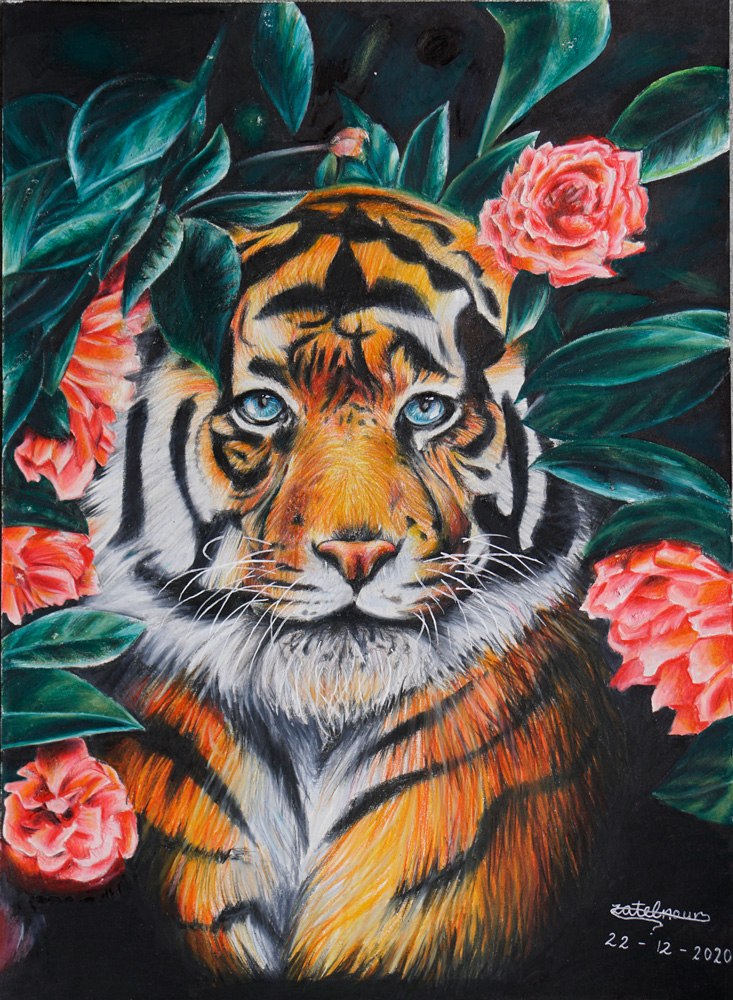
Courageous as a tigre – Nour Kayali
Animal stories can be found in all cultures of the world in a colourful diversity of narratives and genres. Through their differences, these stories express a cross cultural elemental wisdom that these animals embody.
The crosscultural significance of the narrative use of animals as embodying wisdom and natural strength forms a golden opportunity for building bridges between cultures. Educational goals of the programme include the strengthening ecological and cosmopolitan values of global citizenship — such as inclusion, cultural diversity, ecological awareness and 21st century skills. In appealing artistic and educational forms, the QfWf aims to reach different target groups: children, students, parents, teachers, professionals, managers and administrators.
On the Animal Wisdom website the intercultural Wheel of Animal Wisdom categorizes the gathered animal stories from all over the world. This Wheel visualizes the overarching goal of the intercultural Animal Wisdom storytelling programme: how do the (un)wise animals mirror in a symbolic way human behaviour, virtues and mischief. The QfWf develops not a “flat moral” from those stories but a multifaceted one in artistic forms that is thought-provoking: as narrative wisdom that cultures worldwide have developed and that tells in a visual language about humanity and community building.
Intercultural Animal Wisdom
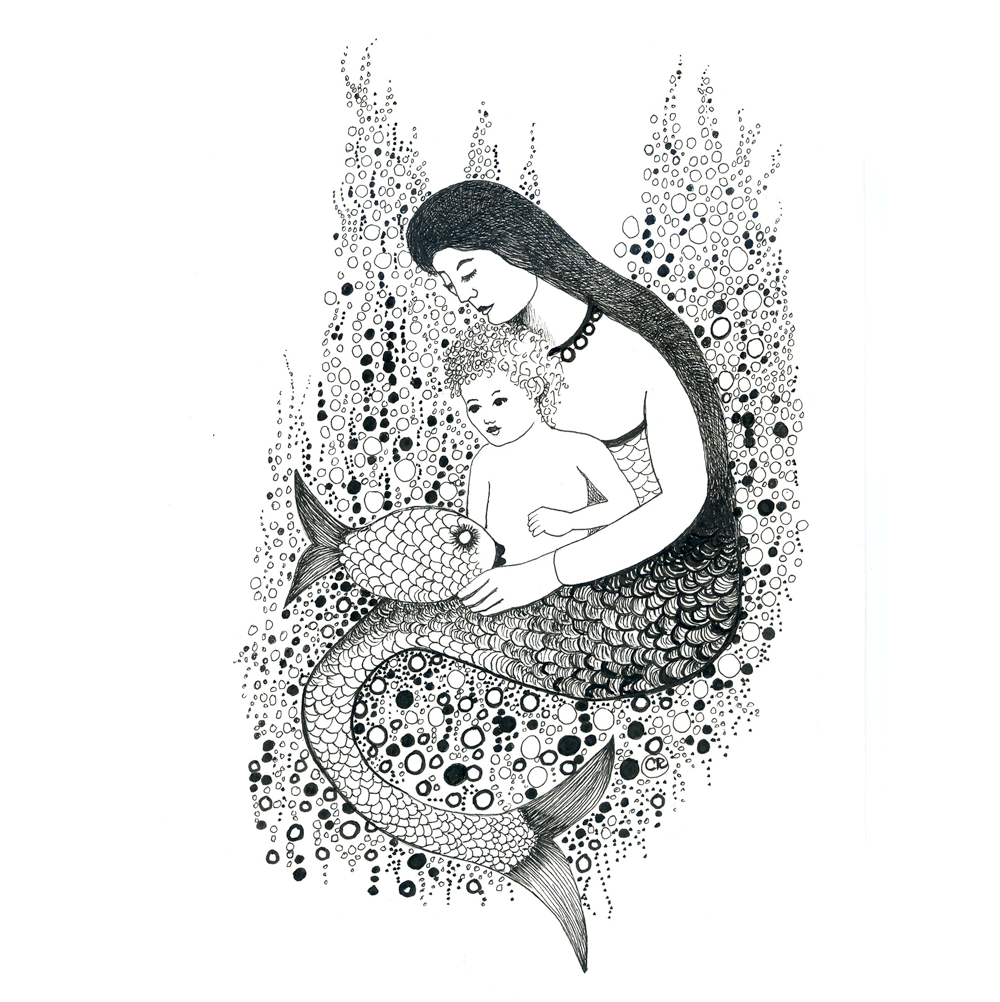
Sea Mermaid — drawing Chrisje Ronde
Communities from all over the world pass on their cultural wisdom gathered over generations in the form of stories, proverbs, symbolism and rituals.
The QfWf Storytelling program unlocks this intercultural source of wisdom and gives it appealing artistic forms, focused on connecting the stories and transcultural symbolism!
Animals embody elemental wisdom
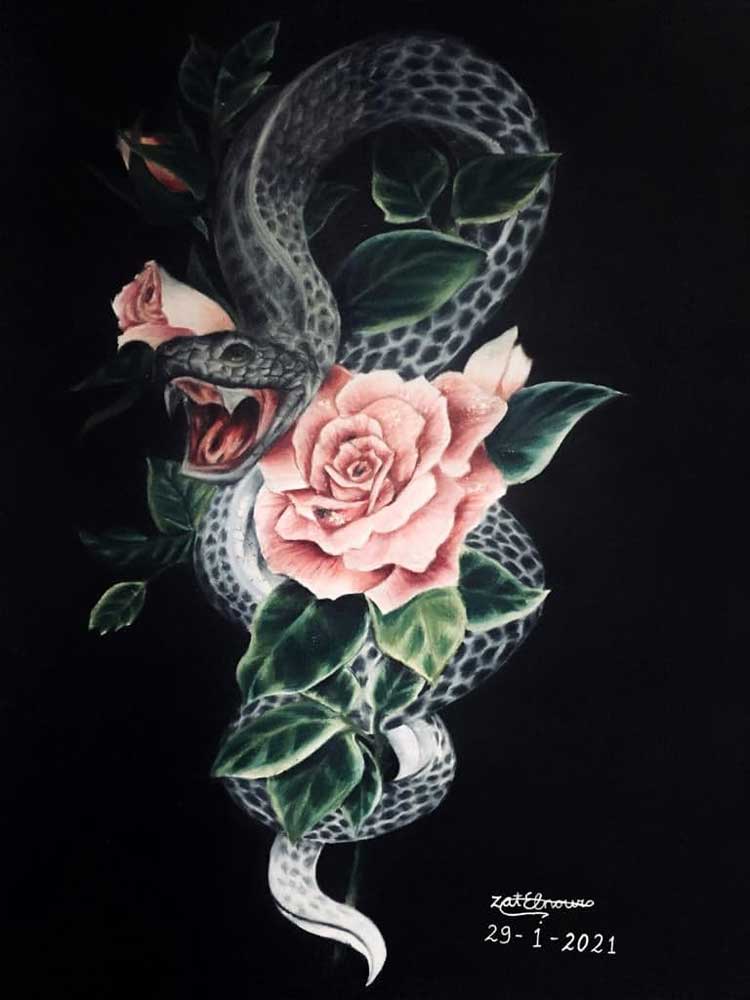
Snake, symbol for natural wisdom – Nour Kayali
Animals represent an elementary wisdom, they display clever and vicious tricks as well as being paragons of virtue. However differently the animals are presented, according to the specific cultural and historical context in which the stories were created, in all cultural traditions animals reflect basic natural strength and wisdom.
Beautiful forms of the latter are found in the classic tales of the of the Hindu Panchatantra and the Buddhist Jatakatamala.
Also, the famous stories of the Ghanaian Anansi as well as the less famous but extraordinary adventures of cricket, chameleon and other Malagasy hero’s.
Bolinus brandaris, the purple snake — drawing Chrisje Ronde
Animals in myths, legends and fairy tales present a wise natural force: proverbial is the wisdom of the owl and the cunning of spider Anansi.
Birds in fairy tales and myths often convey messages, like the raven for example, as a mediator between the world of the gods, the humans and the underworld.
In addition to similarities, there are also interesting cultural differences. For example, almost all cultures have stories about dragons. Although they differ in shape on the one hand — sometimes more serpentine, sometimes more like a giant bird or like some kind of dinosaur — they all embody an enormous (super)natural power.
The QfWf-Mission: the Intercultural Art of Living in a Global World!
The Quest for Wisdom foundation was founded in 2016 by Heidi Muijen. With an intercultural community (the Soul Circle — Quest for Wisdom Circle), the QfWf organizes activities to promote a culture of openness and plurality: necessary ingredients for inclusion as world citizens. Each year, the Soul Circle develops a programme during Seasonal Meetings to be presented at the Annual Meeting Day. Through these activities, the Quest for Wisdom Circle spreads cosmopolitan values into our branching networks as Soul Circle — using playful artistic materials and our World Citizenship programme. In doing so, the QfWf aims to strenghten the connections between people and their cultural heritage. Thereby, contributing to an open and plural culture of world citizenship (inter-esse for cultural diversity) by tapping into one’s own and shared historical (inter)cultural roots and wisdom traditions — highlighting the underlying transcultural values of humanity, compassion and hospitality.
The “Global Citizenship of the streets” project in 2023-2024
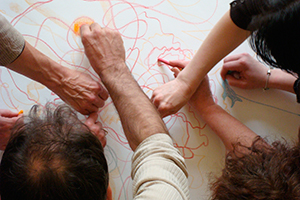
Start of the project with world cafe dialogues – photo Marc Broens
With a subsidy from the Cultural Participation Fund, the QfWf has realized the “World Citizenship of the Street”-project in 2023-2024 in the form of a triptych in 3 phases. Reflecting on the history of slavery (phase 1); then, collecting intercultural ingredients of collective and individueal dreams of global citizenship in images, music, dance, stories and other expressions of (inter)cultural heritage (phase 2); culminating in a social experiment with collaborating partner organizations (phase 3) for global citizenship. The result is an intercultural programme with wisdom and beauty from the four corners of the world.
The QfWf method is using Art as magic and collecting inter-cultural ingredients as fuel, to be presented in meetings as well as in books: (Post)Koloniale Waarden, Amor Fati and Amor Mundi. As spinn-off, the digital platform The Golden Ratio was launched to present the World Citizenship programme; developed in collaboration with social partners: Culturele Droomwevers and Curinesa Foundation, independent artists, Robin Stemerding, Nour Kayali en Louis van Marissing, and the Wehpokamanong Cultural Group, who preserves the cultural heritage of indigenous Caraibs from Suriname in the Netherlands and passes it on to young generations. This project started in the fall 2023 with a meeting in Bussum, culminating in several meetings during the year 2024 and ended with the presentation of the books and an migrants exhibition.
These books and the exhibition were presented in the Public Library of Amsterdam (OBA) in Weesp on the 28th of September 2024, and on the 19th of October 2024 together with the residents of the Regenbooggroep, the organisation that gives shelter to migrants, refugies, homeless and people in need: exchanging cultural ingredients with music, dance and sharing food from each others cultural kitches. A ceramic statue, made by Camile Smeets was presented: this Rainbow Paradise Bird with Cosmic Egg incorporates the world dreams of the intercultural project group. On the 25th of Januari 2025 in the OBA Reigersbos, the exhibition Amor Mundi was reopened, together with the presentation of the book Amor Fati, sharing an intercultural programme with music and spoken word by Angela Gilds review on the project meetings.
The need for an intercultural art of living
Being able to deal in a human way with differences is a delicate matter in our current times. The QfWf calls for an intercultural art of living, visualised with the Wheel of the Intercultural Art of Living.
The QfWf sees World Citizenship as the human answer facing the collective fear for migrants as ‘the strange others’. Tilting tendencies of hatred and agression towards a path of openness and inclusion.
The intercultural art of living is the ability to move nomadic between cultures and to be able to see the beauty of cultural differences. To enhance the art of living as world citizens the QfWf-Soul Circle organises every year around a social relevant theme an intercultural programme and presents this on its digital platform de gulden snede as well as by living encounters such as the yearly QfWf-Meeting Day.
Just like the beauty of the Golden Ratio in natural forms such as the rhythmical growth of leaves and snail shells, as well as in cultural expressions such as the principles how cathedrals are built and the musical harmony in chords.This QfWf-vision and mission to contribute to a cosmopolic world order and culture of inclusion is the core of the QfWf.
Quest for Wisdom, meandering along
Quest 1 — the Wisdom web with wisdom from all corners of the World and a digital platform to exchange ideas.
Dealing with differences has been raised as a social issue by Paul Scheffer, in his controversial article “Het multicultural drama” (2000). Then, calling the fact of living in a multicultural society a ‘drama’ raised debate, now it seems ‘the new normal’. Before that, the international debate had been heated up by Samuel P. Huntington’s terrifying perspective on the Clash of Civilizations (1996). Since then, the political debate on multicultural issues gets harder and harder, increasingly rude on the social media ….
The QfWf wants to play a role in tilting the debate
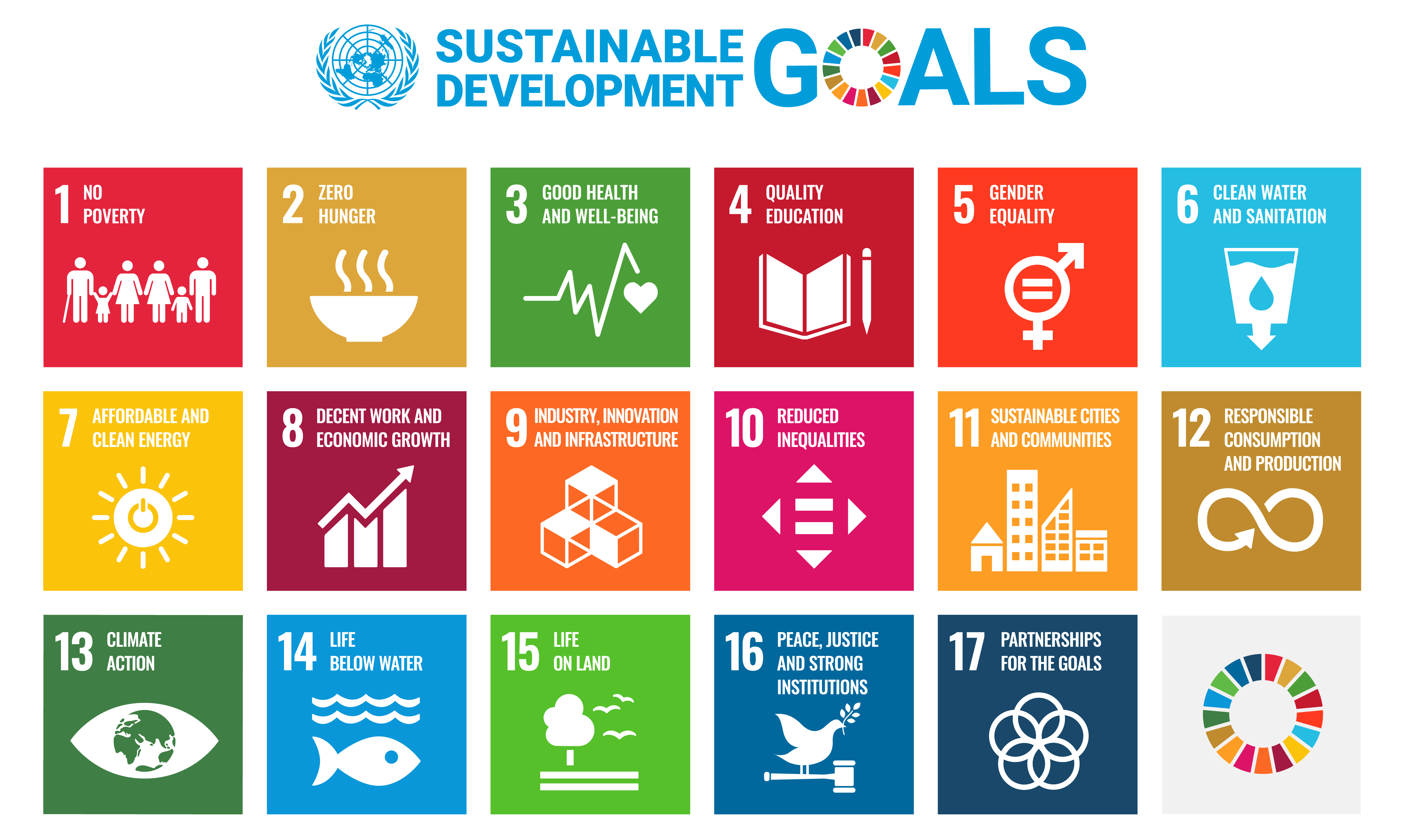
Diagram met de 17 duurzame ontwikkelingsdoelen
The QfWf wants to turn the polarized debate about migration, refugees and religious fights from a problem for ‘political experts’, to a wake up-call for all of us. As world citizens, we hear in the cry for help an ethical appeal to us, to everyone, from the current administration to our neighbours in the street.
How do we deal with, and how do we want to deal with ‘the strange other’?
That strange other can be the foreigner, the outcast, the migrant, the refugee and if we are honest, the ‘other’ we are ourselves …
In order to tilt the debate, the QfWf urges for awareness of who ‘we’ are underneath identifications with our culture, nationality, ethnicity, religion and gender: we are citizens of the cosmopolis, nomads with inter-cultural identities:
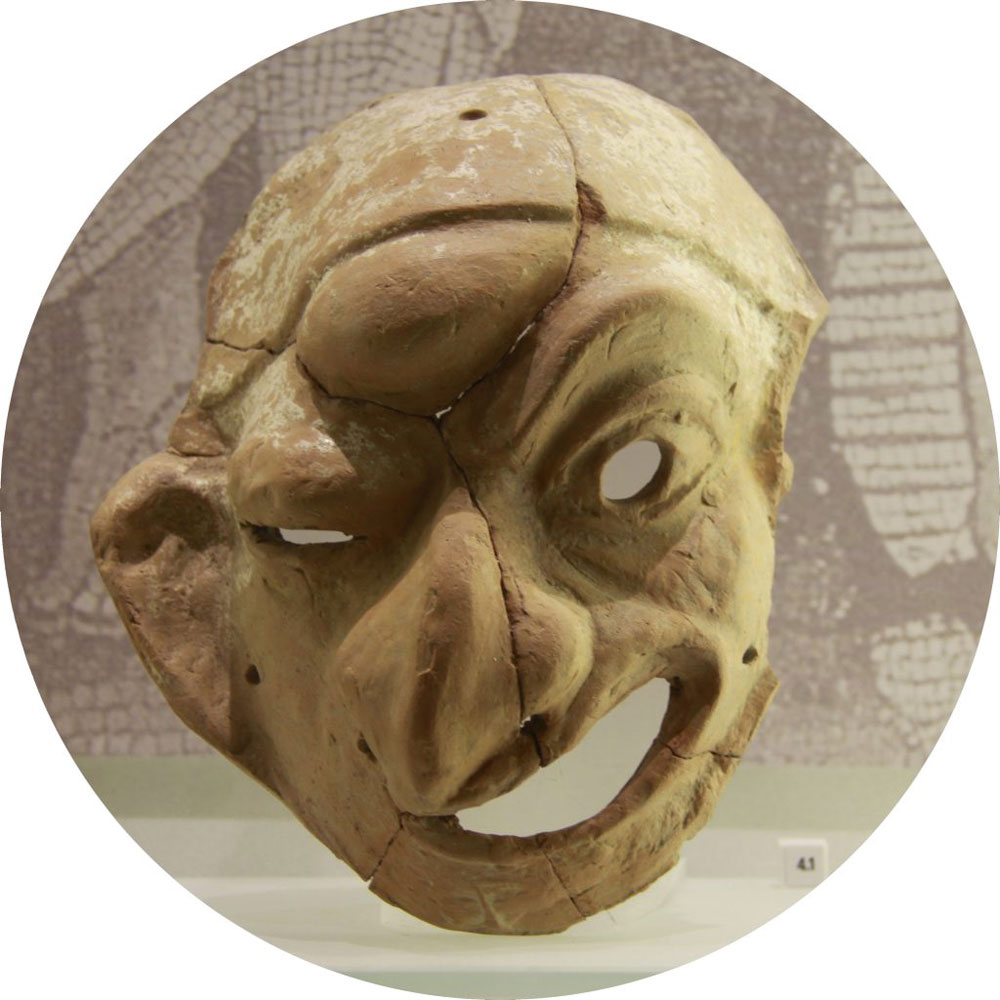
Museo Nazionale Archeologico di Taranto, Italië — foto Joke Koppius
The inter-cultural art of living means not to exclude the other as the ‘unwelcome stranger’, but to see behind our maskes ― the roles we play in society ― seeing our shared human nature, and recognizing ‘the strange other’ in ourselves! Thereby, we create space in-between us (which is in Hannah Arendts view confitional for preserving our humanity), inducing inter- and transcultural connections! This soft power, the fragility of goodness as Martha Nussbaum sees it, is our weapon of world citizenship to overcome the divide and rule power-politics, that we witness in the increasing aggression and hatred, greed and indifference, that we tolerate to rule in our world.
Recognizing the beauty of cultural differences as well as shared human values, is stronger than the fear of ‘otherness’. The road towards this challenging goal is the world of the arts and (inter-)cultural expressions: by co-creating meaningful connections between people and their cultural heritage!
Creating inter- and transcultural connections
QfWf-event in the Library of Amterdam – photo Michel Odjo
The QfWf aims to develop artistic, philosophical, social and practical inter-cultural connections through the arts and wisdom from East and West, North and South. Thereby inspiring people for an intercultural art of living as world citizens: by interacting in respect and interest for each other’s differences. To preserve values of plurality for world citizenship, requires openness within ourselves as well as in-between people by keeping in touch with our human core values, like hospitality, empathy and happiness, which truly connect us as sisters and brothers ― keeping a common playing field open for all!
This website uses cookies to improve your experience. We'll assume you're ok with this, but you can opt-out if you wish. Cookie settingsACCEPT
Privacy & Cookies Policy
Privacy Overview
This website uses cookies to improve your experience while you navigate through the website. Out of these cookies, the cookies that are categorized as necessary are stored on your browser as they are essential for the working of basic functionalities of the website. We also use third-party cookies that help us analyze and understand how you use this website. These cookies will be stored in your browser only with your consent. You also have the option to opt-out of these cookies. But opting out of some of these cookies may have an effect on your browsing experience.
Necessary cookies are absolutely essential for the website to function properly. This category only includes cookies that ensures basic functionalities and security features of the website. These cookies do not store any personal information.
Any cookies that may not be particularly necessary for the website to function and is used specifically to collect user personal data via analytics, ads, other embedded contents are termed as non-necessary cookies. It is mandatory to procure user consent prior to running these cookies on your website.


 “Ten years Quest for Wisdom”!



 Heidi Muijen
 Heidi Muijen and Greg Suffanti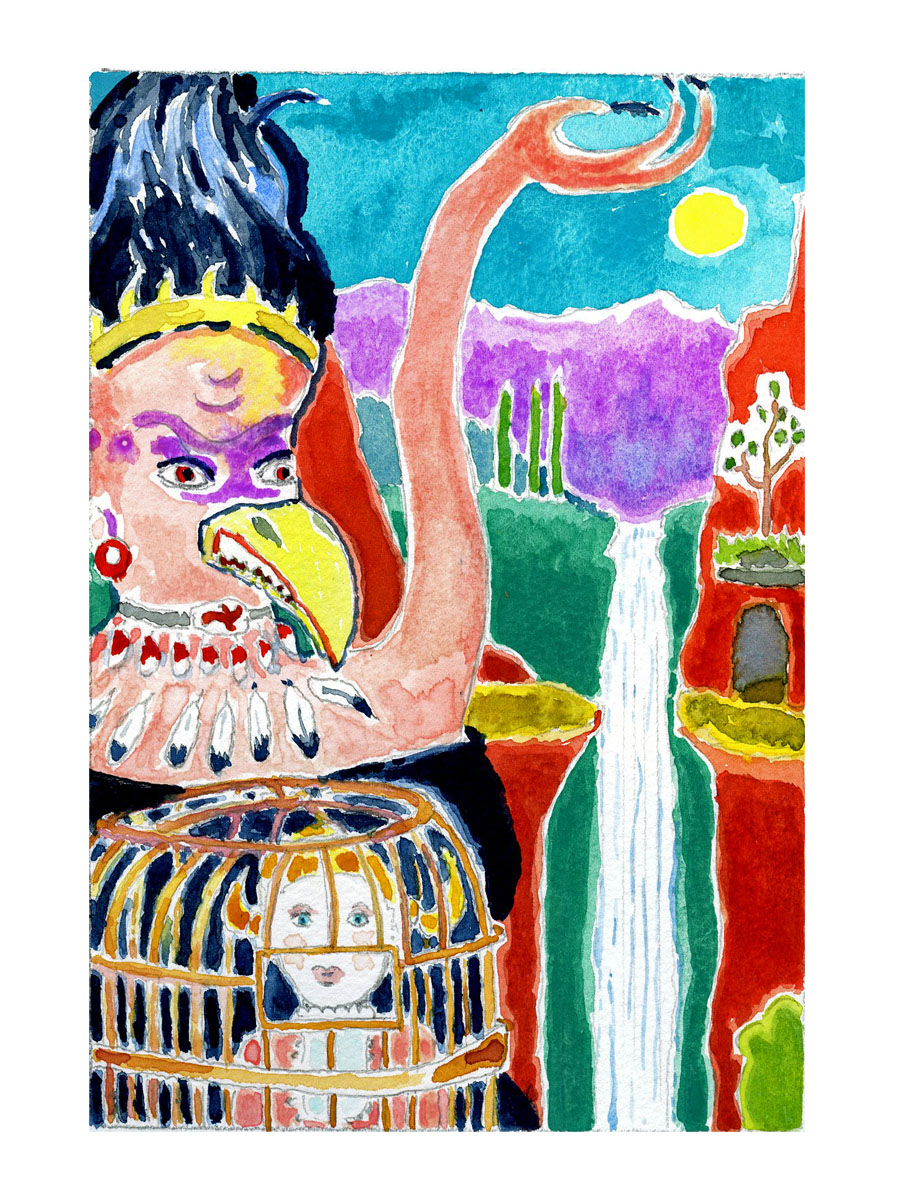
 Greg Suffanti
 Kofi Dorvlo and Louise Müller
 Heid Muijen and Johann Gomes
 Nivedita Yohanna and Greg Suffanti
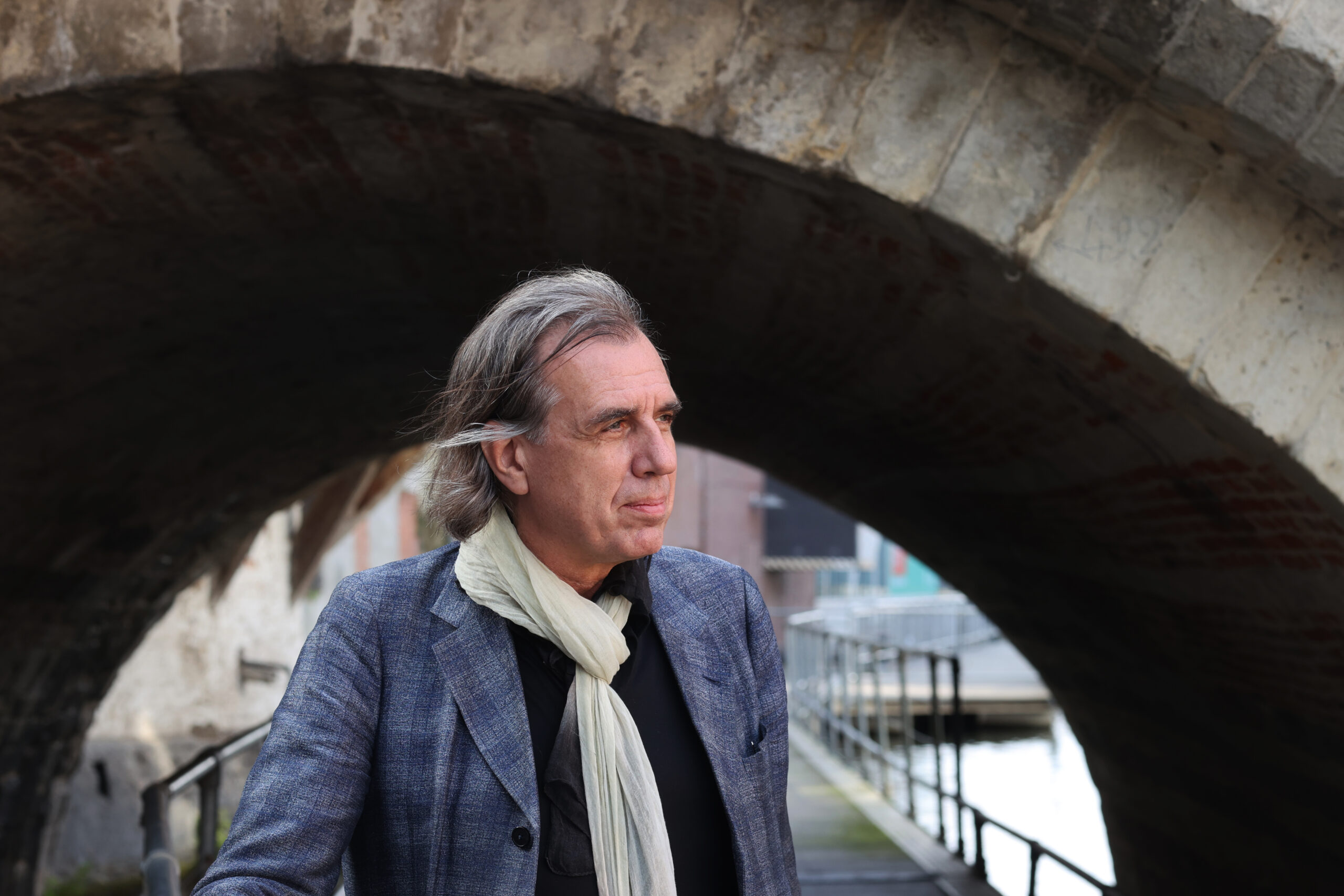
 Marcel Reyners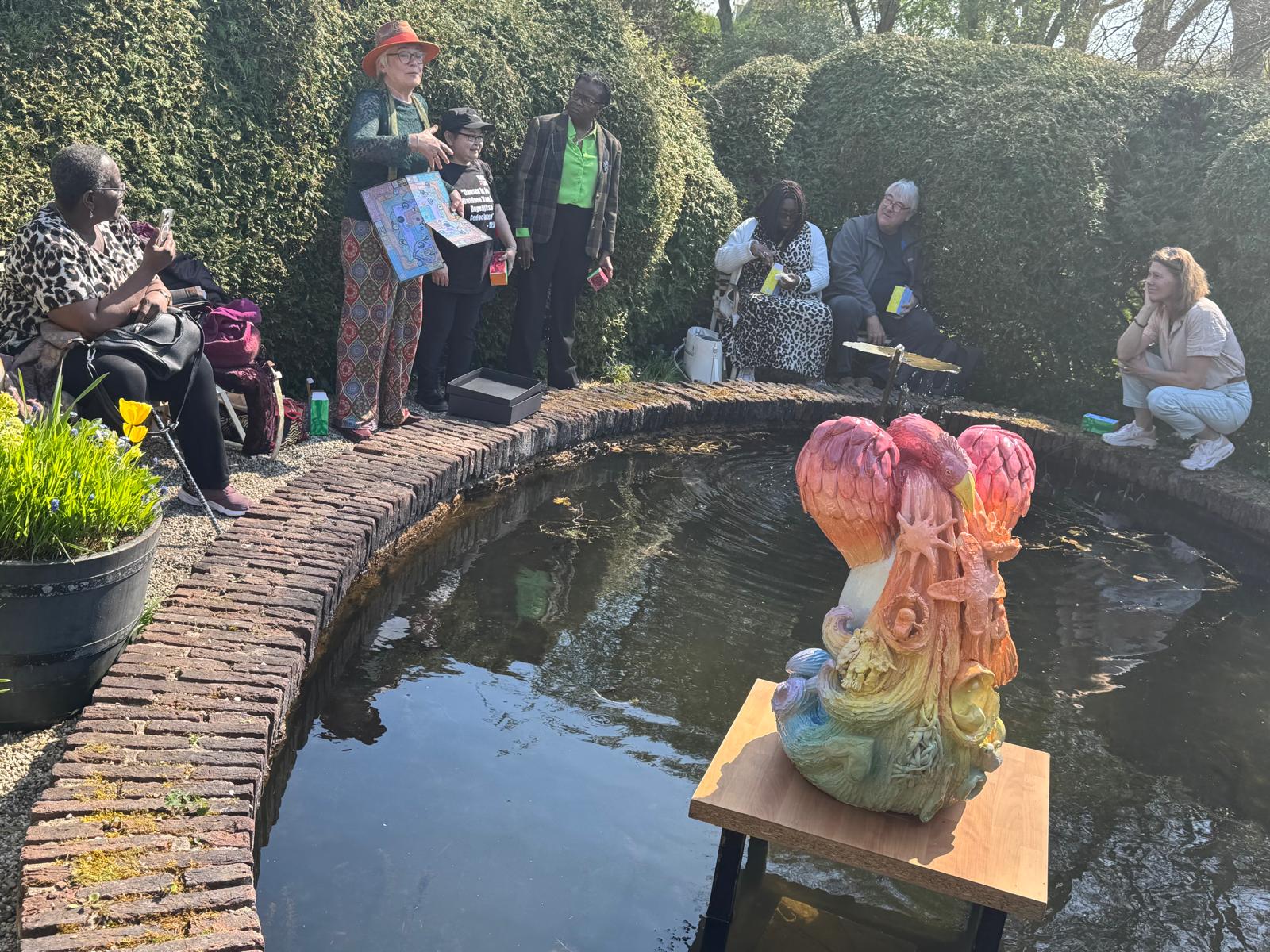


 With a subsidy from